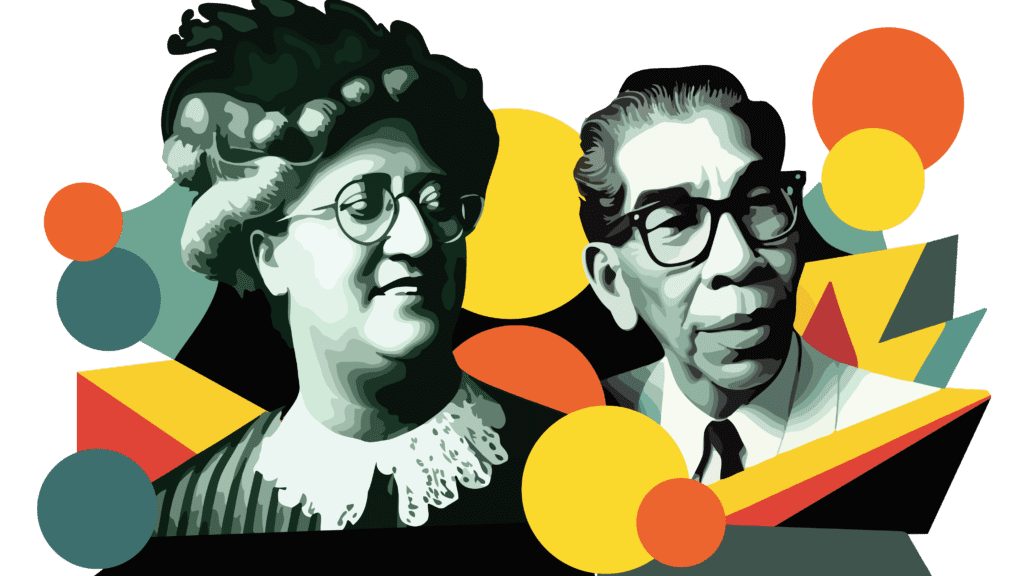
Mary Cunningham Smith’s courageous stance on May 8, 1870, marked a significant moment in Louisville’s, and America’s, civil rights history. As an accomplished musician and the daughter of James C. Cunningham, a noted dance master and band leader, Smith was a respected figure in Louisville. Her decision to board a streetcar with her stepson Gustavus on 8th and Broadway just blocks from their home on Green Street, set off a chain of events that would echo through history.
When the streetcar operator employed by the Louisville City Railway Company forcibly removed Smith and her stepson because of their race she, and her husband Early Smith, took a stand by filing a lawsuit against the company. The Smiths, represented by three white lawyers including James Speed, won their case two years later. This victory sparked a series of protests by African American demonstrators who rallied after church services at Quinn Chapel (originally located on W. Chestnut Street. Now located on W. Muhammad Ali Blvd).
Mary Cunningham Smith’s actions and the subsequent protests led to African Americans securing the right to sit and ride on Louisville streetcars well before the civil rights movement of the 1950s. Her struggle impacted local policy and foreshadowed the modern civil rights movement, including the famed actions of Sarah Keys, Claudette Colvin, Aurelia Browder, Mary Louise Smith-Ware, Rosa Parks, and other African American women who refused to give up their seats. Mary Cunningham Smith’s story remains an enduring symbol of the fight for equality and the power of determined individuals to enact change.
Lyman T. Johnson was an influential figure in the fight for civil rights in Kentucky, best known for breaking the color barrier at the University of Kentucky in 1948. His successful federal lawsuit led to the desegregation of the University, making him the first African American to attend classes there in 1949. Johnson’s actions were a precursor to the historic 1954 Brown v. Board of Education decision that declared segregation in public schools unconstitutional.
A dedicated teacher at Central High School in Louisville for 33 years, Johnson was a fierce advocate for equality, challenging discrimination and fighting for equal pay for Black teachers. He also served as an assistant principal and school board member in Jefferson County Public Schools. Beyond his educational contributions, Johnson was a grassroots leader, actively working to integrate neighborhoods, swimming pools, schools, and restaurants during the civil rights movement.
Johnson received a bachelor’s degree from Virginia Union University and a master’s from the University of Michigan. His commitment to justice was recognized with an honorary doctorate from the University of Kentucky, the Governor’s Distinguished Service Medallion for Volunteerism, and Louisville’s first Freedom Award. His legacy lives on through Lyman T. Johnson Hall at the University of Kentucky, Johnson Middle School, and various fellowship programs named in his honor. Celebrated for his lifelong dedication to equality in educational opportunities, Johnson’s story is a testament to the impact one individual can have on society’s progress.
See experiences and attractions honoring the impact and influence of Black culture on Louisville.
Louisville would not be the creative, innovative, passionate city that it is without its Black community. For so many things that make Louisville unique- from Bourbon, to horse racing, to food traditions and even the Greatest himself, Muhammad Ali- countless people of color have contributed their gifts to build the city’s vibrant culture. The past can be complex and sometimes hard to imagine through a modern lens. We all benefit from learning a destination’s complete history. We welcome you to discover Bourbon City’s Black Heritage.